If you have ever typed something personal into ChatGPT and then paused for a second thinking, “Wait… is this actually safe?” — you are not alone.
Many people use AI tools casually for writing, learning, planning, or problem-solving. But at the same time, there is a growing fear:
What happens to the data I share? Can AI remember this? Can someone else see it later?
This article is written for regular users, not tech experts. No fear-mongering, no confusing legal language. Just a clear, honest explanation so you can use AI tools confidently and responsibly.
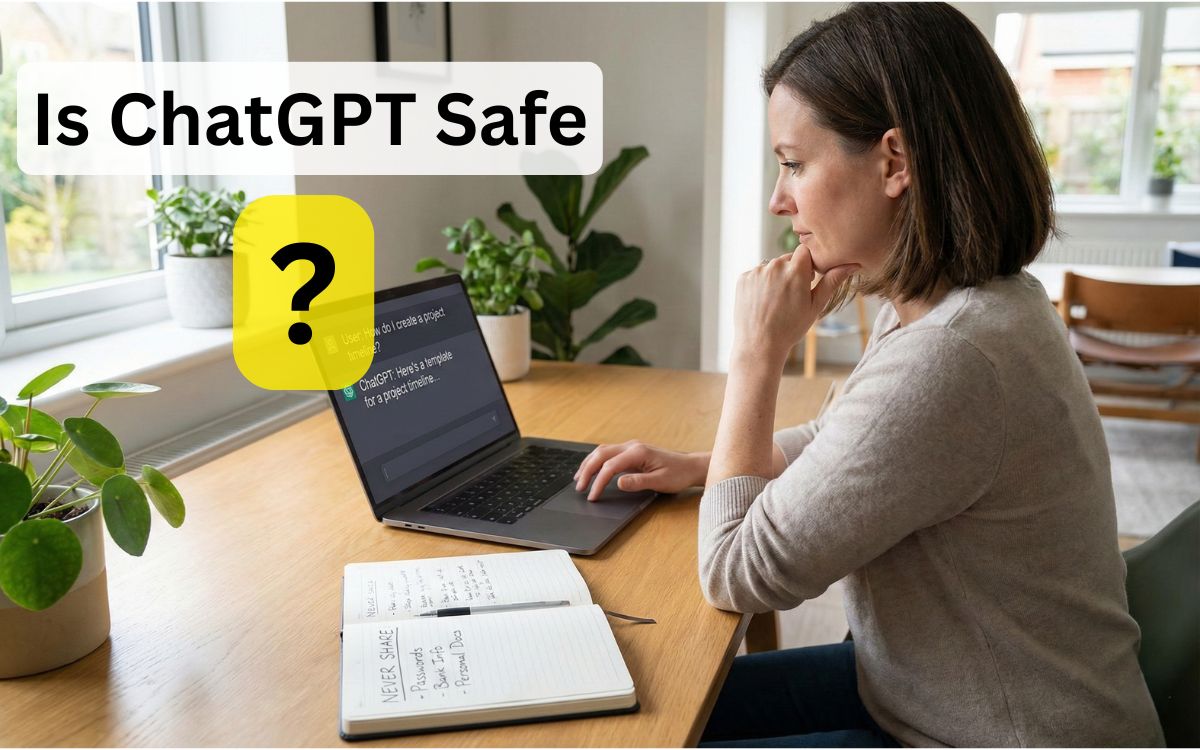
How ChatGPT Handles User Data
When you interact with ChatGPT, your messages are processed by servers to generate responses. This is necessary for the tool to work. However, many users misunderstand what processing actually means.
ChatGPT does not think, remember conversations like a human, or secretly monitor individual users. Each conversation is handled as an interaction, not a personal diary entry linked to your identity in a human way.
That said, conversations may be temporarily stored to improve performance, ensure safety, and prevent misuse. These systems focus on patterns and quality improvement—not on tracking individual people.
The most important thing to understand is this:
AI tools are designed to respond, not to build personal profiles of users.
Still, how safe something is depends not only on the tool, but also on how you use it.
While choosing the right display technology improves your smartphone experience, it’s also important to use technology responsibly. Learn practical steps in our article on How to Protect Your Personal Information on Social Media to avoid common online privacy mistakes.
Is ChatGPT Safe for Confidential Information?
Short answer: No AI tool should be treated as a vault for confidential information.
ChatGPT is safe for:
- General questions
- Learning concepts
- Writing assistance
- Productivity help
But it is not meant for sensitive or confidential data such as private documents, passwords, or legal records.
Think of ChatGPT like a helpful stranger who gives great advice — but you would not hand them your personal files or bank details. Even if the system is secure, the risk is unnecessary.
Using AI responsibly means understanding its limits, not blindly trusting it with private information.
Does ChatGPT Share Your Data With Others?
This is one of the biggest fears people have, and it often comes from misinformation.
ChatGPT does not:
- Publicly share your chats
- Post your questions online
- Send your messages to other users
Your conversation does not appear in someone else’s chat window.
However, data may be reviewed internally to improve AI responses, detect misuse, or maintain safety standards. This process focuses on system improvement, not exposing individual users.
So while your data is not being “sold” or “broadcast,” you should still act as if anything sensitive does not belong in an AI chat.
What Not to Share With ChatGPT
This is where most people make mistakes — not because they are careless, but because they underestimate how much they are sharing.
You should never share:
- Passwords or OTPs
- Bank account or card details
- Aadhaar, PAN, passport numbers
- Login credentials of any platform
- Private medical records
- Confidential work documents
- Personal addresses or phone numbers
Even if you trust the platform, sharing this information has no real benefit and introduces unnecessary risk.
A good rule to follow:
If you wouldn’t post it publicly online, don’t put it into an AI tool.
What Should You Avoid While Using AI Tools
Apart from personal data, there are behavioral mistakes people make that reduce safety and reliability.
Avoid:
- Treating AI answers as absolute truth
- Using AI for final legal or medical decisions
- Uploading sensitive files without understanding policies
- Assuming AI “knows” your past chats permanently
- Depending on AI instead of critical thinking
AI tools are assistants, not authorities. They help you think better, not think for you.
The safest users are those who verify important information and use AI as a support system, not a replacement for judgment.
What Happens to the Information You Share With External AI Tools
Not all AI tools are the same.
Some third-party AI apps:
- Store conversations longer
- Use data for analytics or advertising
- Have weaker security practices
- Lack clear privacy policies
This is why reading the privacy policy of any AI tool matters — especially tools that ask you to log in, upload files, or connect accounts.
Free tools often monetize differently than paid services. That doesn’t mean they are unsafe, but it does mean you should be more cautious.
Before using any AI tool, ask yourself:
- Who owns this tool?
- Why is it free?
- How do they handle user data?
Awareness is your strongest protection.
How to Use AI Tools Safely in Daily Life
You don’t need to stop using AI to stay safe. You just need to use it smartly.
Here are practical habits that work:
- Use AI for ideas, drafts, explanations, not secrets
- Rephrase sensitive situations instead of giving exact details
- Avoid uploading personal documents unless necessary
- Double-check facts that affect money, health, or law
- Treat AI chats as semi-public spaces
When used correctly, AI tools can increase productivity, reduce stress, and save time without putting your privacy at risk.
Modern technology can help you stay organized beyond just hardware choices. If you want to manage tasks, schedules, and daily routines more efficiently, check out our guide on How to Use ChatGPT to Organize Your Life.
Final Thoughts: Responsible AI Usage
AI tools like ChatGPT are powerful — but power always comes with responsibility.
They are safe when:
- You understand their purpose
- You respect their limitations
- You protect your own data
The goal is not fear, but awareness. When you know what not to share and how AI systems work at a basic level, you can use these tools confidently without anxiety.
Responsible users don’t avoid AI.
They use it wisely.
And that’s exactly how AI should be part of daily life — helpful, safe, and under your control.
Frequently Asked Questions (FAQs)
Is ChatGPT safe to use for normal users?
Yes. ChatGPT is safe for everyday tasks like learning, writing, and planning, as long as you avoid sharing sensitive or personal information.
Can ChatGPT remember my personal details?
No. ChatGPT does not remember personal details across conversations in a human-like way or build personal profiles of users.
Does ChatGPT store or save conversations permanently?
Conversations may be stored temporarily for quality and safety improvements, but they are not used to track individual users personally.
Can my ChatGPT conversations be seen by other users?
No. Your conversations are private and do not appear in other users’ chats.
Is it safe to share passwords or documents with AI tools?
No. You should never share passwords, financial details, or confidential documents with any AI tool.
Are third-party AI tools riskier than ChatGPT?
Some third-party AI tools may have different data policies, so it’s important to read their privacy policies before using them.